
Finding the right bra size should not feel complicated. True Bra Size helps you calculate a practical starting size using just two simple body measurements.
Units
Rounding modes
Units
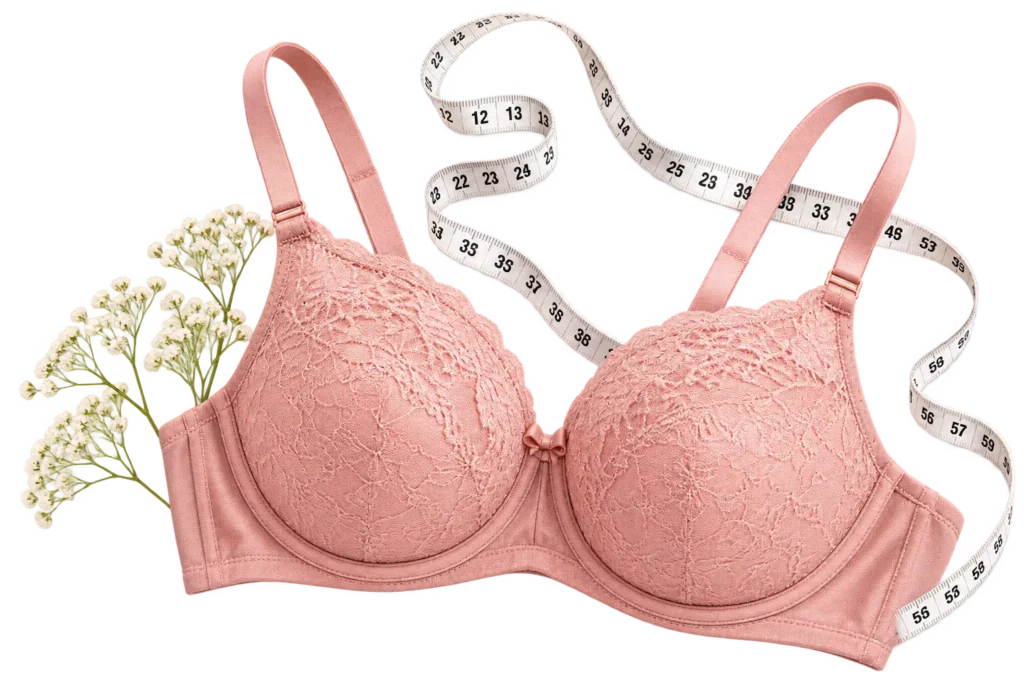
Use a soft tape and enter two measurements. We will show the result in the sizing system you shop in.
Enter your breast measurements to estimate the approximate weight.
This calculator provides an approximate estimate only. Actual breast weight may vary depending on breast tissue, density, shape, and individual anatomy.
A good length converter should make every measurement simple while keeping your privacy in your hands. Each value is calculated directly in your browser through browser calculation and local processing, so your measurement data and other personal data stay protected.
We do not store, save, or share your data, and once you close the page, the information disappears. This gives you full user control over your body measurements, choice, and measurement result.
If you want to keep result details, simply take a screenshot or copy the result before leaving the page, giving you practical data privacy without making the tool harder to use.
Your estimated breast weight is the combined weight of both breasts, shown in grams (g) and kilograms (kg). It is derived from breast volume, measured in cc or mL, and multiplied by an estimated tissue density of about 0.95-1.0 g/mL.
This range reflects the mix of adipose tissue and glandular tissue, giving a practical estimate in grams and kilograms rather than an exact medical measurement.
Breast Weight | Approximate Cup Range | Possible Impact |
Light: under 500 g | Around A cup | Usually places very little extra strain on the shoulders or back. |
Moderate: 500–1,500 g | Around B–C cup | May cause some shoulder pressure, especially when the bra does not fit properly. |
Heavy: 1,500–3,000 g | Around D–DD cup | Can place a noticeable load on the shoulders and upper back. A supportive, well-fitted bra with wider straps can help distribute the weight more comfortably. |
Very Heavy: over 3,000 g | Around DDD+ cup | Greater breast weight may be linked with shoulder grooves, back discomfort, and posture problems, particularly when support is poor. |
For reliable results, use a soft measuring tape and follow a consistent measurement technique when measuring the breast. Stand upright, breathe normally, and keep the tape gently against the skin without compressing the breast tissue.
Staying upright with natural breathing helps avoid compression and gives more consistent measurements of the tissue. Remember that these are external body surface values, so some individual variation is normal.
Natural stance: Stand upright in a natural upright posture with shoulders relaxed, keeping your shoulders loose and arms at sides. Let your arms rest by your sides, keep your chest natural, and do not push chest forward, lean forward, or hunch during measurement.
Normal breathing: Take your measurements after breathing out normally. Keep your breathing relaxed, and avoid holding your breath or taking an unusually deep breath.
Gentle contact: Place the tape gently against the skin, making sure it does not press down on or flatten the breast tissue.
Left-right differences: It’s completely normal for one breast to be slightly larger than the other. For a more accurate estimate, measure the left and right breast separately.
Mirror check: Use a mirror to check that the measuring tape stays straight, level, and in the correct position around your body.
Measure the horizontal width of one breast where the breast meets chest wall, as this gives a useful measurement of the breast footprint. Take the full width across the base, then divide by 2 to find the radius.
From practical measuring experience, a larger base usually means a wider breast, so measuring this area carefully helps improve the accuracy of the calculation.
For accurate breast measurement, first stand sideways in front of a mirror and check that your body position is natural and relaxed.
Next, measure the breast from the most forward point, usually around the nipple area, moving straight back toward the chest wall plane.
This forward point near the nipple shows how far the breast extends from the chest wall. The measured height is called the projection height, and getting this projection right gives a more realistic estimate of breast projection for the calculator.
Your breast weight affects how your body carries the load through your bra, shoulders, and spine every hour of the day. Every extra gram matters more as total breast weight increases. Once it reaches around 800–1,000g, your posture may start changing: the shoulders roll forward, the upper back rounds, and the trapezius muscles can overwork to keep the bust upright. With specific full-bust sizes such as 34DD, weight distribution shifts noticeably, so good support often means reinforced side panels and a firm underband. Over months or years, poor support can create a compensation pattern, leading to chronic tension, tension headaches, deep shoulder grooving, and pressure from narrow bra straps.
For many people, the single most effective intervention is not always weight loss or surgery, but switching to a bra engineered for actual load. A supportive wireless bra with wide straps of at least 1.5–2 cm, strong anchors at the breast root, and full-cup coverage redistributes breast weight around the ribcage instead of letting it feel like it is hanging from shoulders. Experienced fitters consistently recommend recalculating your bra size as your weight, hormones, or activity level shifts, because the fit that worked two years ago may now be the hidden cause of back pain. If your calculated weight matches your back discomfort, a comfortable wireless bras guide can help you compare engineered support options designed specifically for heavier busts.
Measure your snug underbust and loose full bust, then enter both numbers into the calculator. The underbust helps determine the band, while the difference between the full bust and band helps determine the cup.
Measure your snug underbust and loose full bust, then enter both numbers into the calculator. The underbust helps determine the band, while the difference between the full bust and band helps determine the cup.
Measure your snug underbust and loose full bust, then enter both numbers into the calculator. The underbust helps determine the band, while the difference between the full bust and band helps determine the cup.
Measure your snug underbust and loose full bust, then enter both numbers into the calculator. The underbust helps determine the band, while the difference between the full bust and band helps determine the cup.